HSV GTS - The Crown Jewel of Holden Performance
Some badges carry weight. Others carry legacy. The GTS badge carries both.
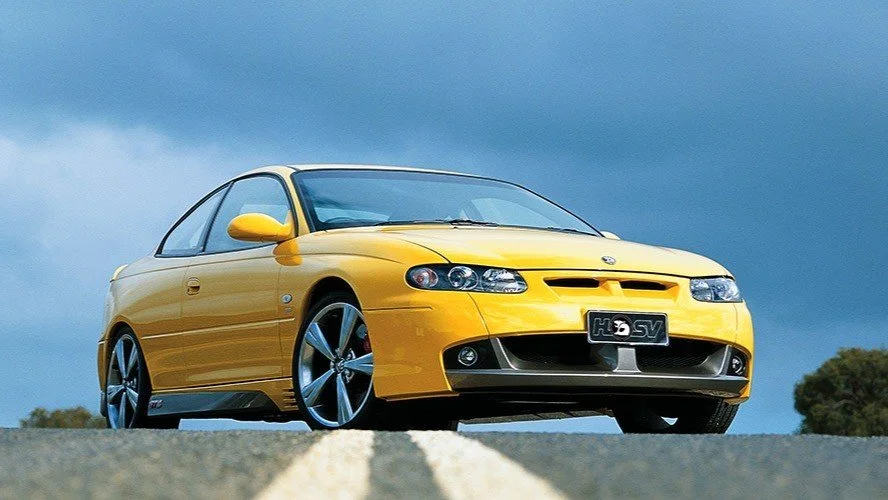
2002 HSV GTS Coupe - The Modern Monaro GTS
In the modern Australian performance era, no three letters are more revered than HSV GTS. They represent not just power, but intent. The GTS was never meant to be the fastest-selling HSV, nor the most accessible. It was conceived as the ultimate expression of what Holden Special Vehicles could build when compromise was removed and ambition allowed to run free.
To understand why the HSV GTS is viewed as one of the most desirable Australian performance cars ever built, you need to look beyond peak power figures and Holdens motor racing success. You need to understand its lineage, its restraint, and the fact that the GTS was never just another fast Commodore. It was the flagship. Always.
The HSV GTS story begins in 1992 with the VP GTS, a car that quietly but decisively set the tone. Powered by the locally built 5.0-litre Holden V8, producing 200kW, which is certainly not outrageous by today’s standards, but in its era that was big power making it a serious performance sedan. One chink out of the GTS armour, was that it was only available as an automatic.
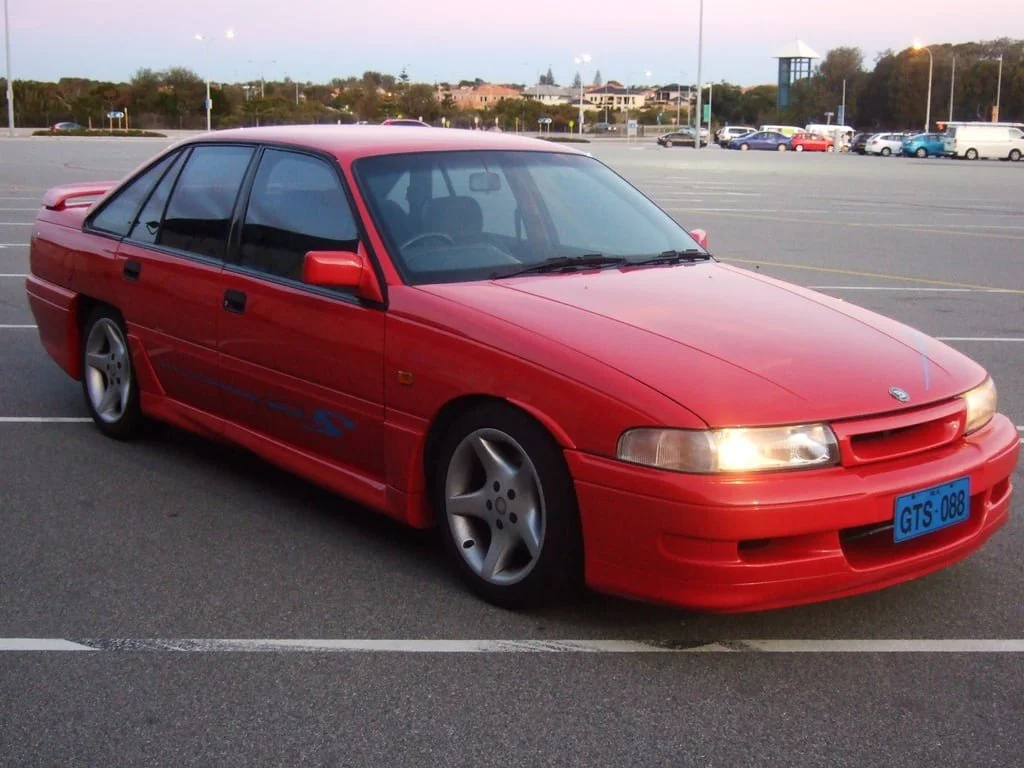
1992 HSV VP GTS - one of just 130 ever built!
What made the VP GTS special wasn’t just its engine. It was the philosophy. This was HSV positioning itself not as a tuner, but as a manufacturer of complete performance cars. Enhanced brakes, suspension, unique trim, and purposeful styling elevated the GTS beyond the Clubsport and Maloo that sat beneath it.
The VP GTS laid the foundation: limited numbers, premium pricing, and an unmistakable sense that this was the car you bought if you wanted the best HSV available.
The VR and VS GTS models continued this approach, refining the concept rather than reinventing it. Still powered by Australian-built V8s, these cars benefitted from incremental improvements in suspension, braking, and interior appointments. The VS GTS, in particular, is remembered fondly for its balance—powerful, muscular, but still unmistakably Australian in character. The optional 5.7lt Harrop stroker engine provided an unprecedented 215kW of power
And of course, then there is the visually polarizing VS GTS-R. Only available in the striking XU3 Yellah paintwork, it featured a wild supercar style body kit, eye-catching yellow interior trim, and only available in very limited numbers – just 85 were built!
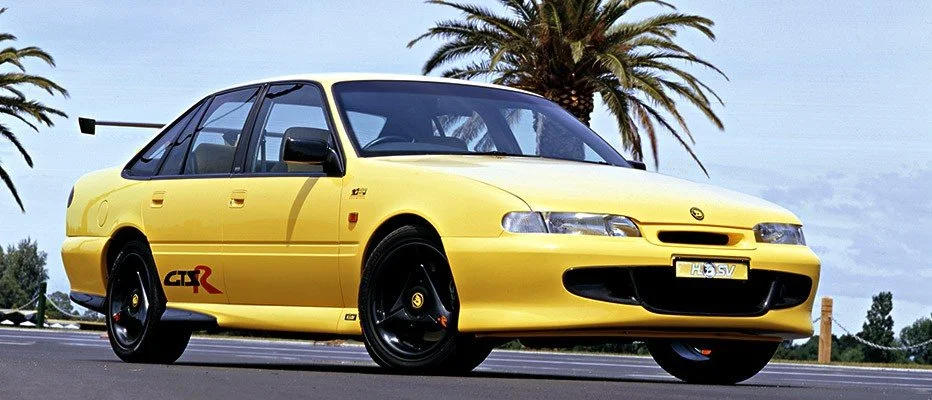
1996 HSV GTS-R - one of just 85 ever built!
The arrival of the VT GTS marked a significant evolution. The VT platform brought with it a stiffer body, improved safety, and a more modern driving experience. HSV capitalised, delivering a GTS that felt genuinely world-class for its time, with another mild increase in power to 220kW
Then came a watershed moment. The VT Series II GTS. This car changed everything.
With the introduction of the imported Callaway-developed C4B 5.7-litre LS1-based V8, HSV delivered 300kW—making it the first Australian-built performance car to reach that milestone. This was not just a number; it was a declaration.
For the first time, an Australian sedan could stand shoulder to shoulder with European performance saloons on raw output. The VT II GTS became an instant icon, and its significance cannot be overstated. It cemented the GTS as the apex of Australian performance engineering and signalled HSV’s intent to play on the global stage.

2000 HSV VT II GTS - one of just 117 ever built!
The VX and VY GTS models built on this momentum. Power outputs increased modestly, but the real gains were in drivability, braking, and refinement. These cars became faster, more composed, and more usable—true high-performance daily drivers.
Importantly, HSV resisted the temptation to flood the market. GTS production numbers remained controlled, reinforcing the model’s exclusivity and prestige. These were not cars you stumbled upon easily. You sought them out.
You would think that logically, the VZ GTS would follow. But, that never was to be, is one of the great “what ifs” in HSV history.
The VZ era was transitional. Holden had well and truly moved away from locally developed V8s, emissions standards were tightening, and HSV was preparing for the arrival of the VE platform. Rather than compromise the GTS formula with a stopgap model, HSV made the deliberate decision to pause the badge (however we will touch on the modern Monaro GTS a little later).
This restraint matters. It reinforces that GTS was not a name to be applied lightly. If the car could not meet the expectations of the badge—mechanically, dynamically, and philosophically—it simply would not exist.
When the VE GTS arrived, it did so with authority.
The VE platform was a clean-sheet design, and HSV seized the opportunity. Powered by a 6.0-litre LS2 V8 producing 307kW, the VE GTS was larger, stiffer, and more sophisticated than anything HSV had built before. It also introduced genuinely advanced chassis tuning and braking systems that could finally harness the power on offer.
The subsequent VE Series II GTS brought further refinements, including the new 6.2lt LS3 engine, and by the time of the VE III GTS, HSV had honed the package into a genuinely complete performance sedan—comfortable, capable, and brutally fast. The power output also grew modestly, up to 325kW and continuing to edge out the comparable FPV variants until the FG Mk2 GT arrived with 5.0lt and 335kW of Supercharged V8 power.
Then came the car that would redefine the badge forever: the VF GTS, commonly known as the GEN-F GTS.
Powered by the supercharged LSA 6.2-litre V8, producing 430kW and 740Nm, the VF GTS was unlike anything Australia had ever produced. Magnetic Ride Control, massive AP Racing brakes, torque vectoring, and world-class interior technology made it a true modern performance flagship.
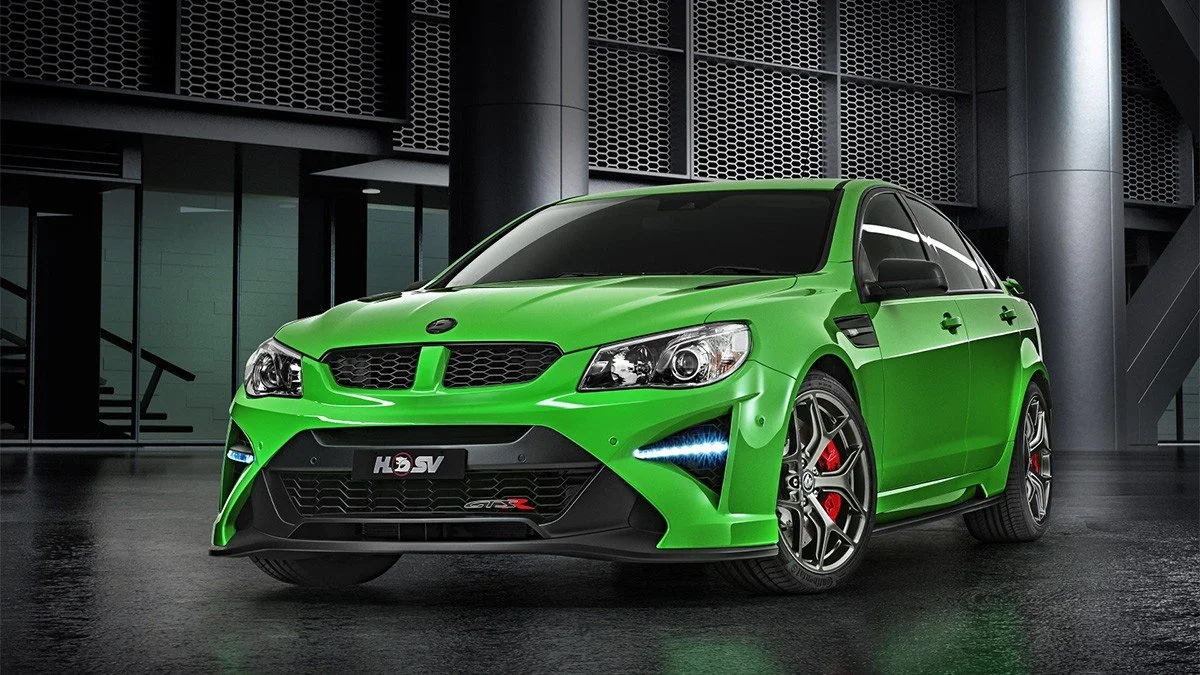
2017 HSV Gen-F GTS-R - one of 1,270 ever built!
The VF II GTS refined the formula further, and for the first and only time a ute wore the nameplate in the GTS Maloo, but it was the final chapter that sealed the legend. The GTS-R celebrated HSV’s past with bold liveries and limited production, but the GTS-R W1 was something else entirely.
Powered by the LS9 engine from the Chevrolet Corvette ZR1, the W1 was the most powerful and extreme road car ever built in Australia. With 474kW, bespoke suspension, unique driveline components, and a price tag that reflected its ambition, the W1 was not just the ultimate HSV—it was the ultimate Australian car – and in the eyes of many, the greatest of all time.
It was also the end of the road for locally produced performance cars.
The HSV GTS is revered because it was never diluted. It was never really mass-produced. It was never positioned as a bargain. Each generation represented the absolute peak of what HSV could achieve at the time.
That philosophy mirrors an earlier Australian performance icon: the Monaro GTS.

1968 Holden HK Monaro GTS - and Australian muscle car icon
From the HK, HT, HG, through to the HQ, HJ, HX and HZ, the Monaro GTS badge represented performance, style, and aspiration. When Holden revived the Monaro in the early 2000s, the V2 Monaro GTS once again sat at the top of the range, offered in three key variants and reinforcing the idea that GTS was not just a trim level—it was a statement. It also took the place for the missing VZ GTS, ensuring that enthusiasts who were continually supporting the HSV range did have a top-tier car to buy.
HSV understood this lineage. The modern GTS sedans were not replacements for the Monaro GTS; they were its spiritual successors. Four doors instead of two, perhaps—but the same brutal intent.
Today, the HSV GTS range—particularly the VT II, GTS Coupe, and GEN-F cars— are viewed as some of the most desirable Australian performance vehicles ever built. They represent a unique convergence of local engineering talent, global technology, and cultural relevance.
They are the last of a kind. Cars built without apology, without downsizing, and without concern for global homogenisation. Cars that were unapologetically Australian.
And that is why the HSV GTS endures. Not just as a fast car, but as a symbol of what Australian performance once was—and may never be again.
If you’re lucky enough to own one of these heralded models, you already understand the attraction better than most.
If you’ve always dreamt of owning a HSV GTS, may we suggest the VS GTS 215i as a semi-affordable entry point to ownership, and the GTS Coupe as the ones to consider investing and driving sparingly.
And if you’re not quite in the position to buy, make sure you keep your eyes peeled at local car meets and events, as they are a rare sight to see!
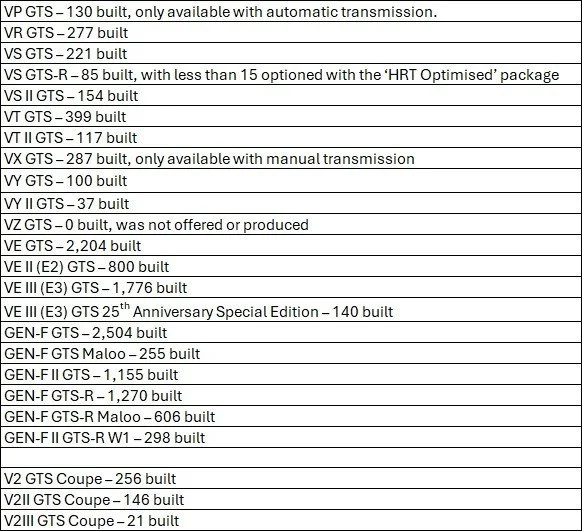
Production Numbers for the HSV GTS